Press Releases
- Details
- Category: Press Releases
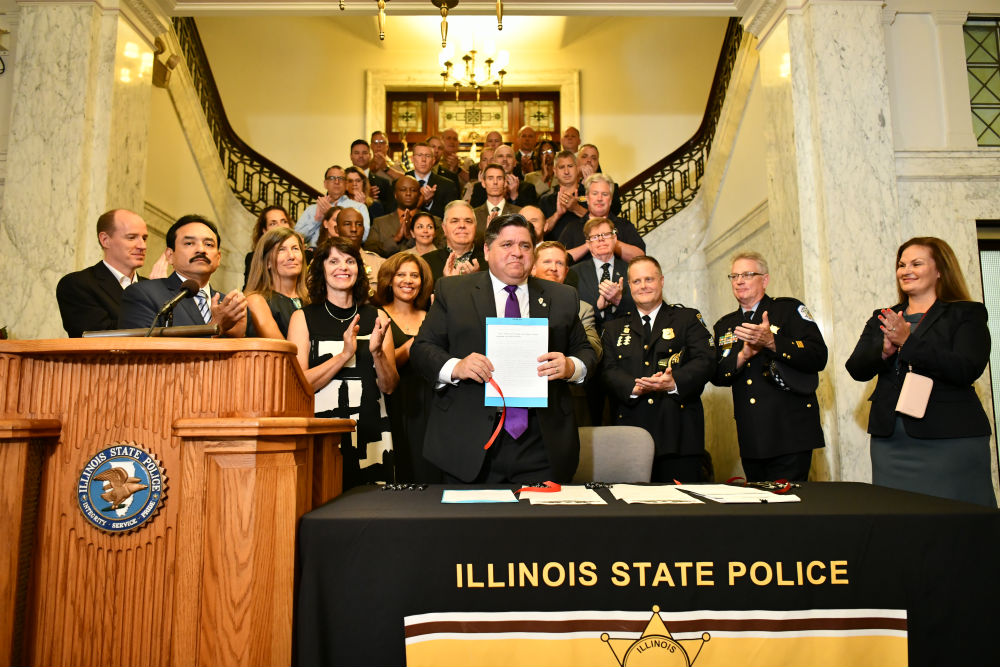 SPRINGFIELD – Illinois law enforcement officers will receive increased wellness and suicide prevention training starting Jan. 1 thanks to a new law sponsored by State Senator Bill Cunningham.
“Suicide and mental health are some of the most serious issues facing our law enforcement community,” said Cunningham, a Democrat who represents portions of Chicago and the southwest suburbs. “This law will help officers recognize these issues and provide them with a better understanding of the mental health resources available to them.”
House Bill 2767 requires the Illinois Law Enforcement Training and Standards Board to develop a course addressing the issues of officer wellness and suicide prevention. The course will be included in the training requirements police officers must complete before graduating the police academy and will also need to be completed every three years after graduation.
The training will include recognizing signs of work-related cumulative stress, issues that may lead to suicide and solutions for intervention with peer support resources.
“Seeking help for these issues isn’t a sign of weakness, it’s a sign of strength,” Cunningham said. “We need to eliminate the stigma surrounding mental health in the first responder community and ensure that everyone has access to the resources they need.”
This year, Cunningham also cosponsored House Bill 2766, the First Responders Suicide Prevention Act, which implements training for individuals tasked with providing peer support counseling to colleagues, requires police and fire departments to develop disciplinary measures for those who violate confidentiality agreements, and creates a civil cause of action for employees whose employment status is adversely affected by information obtained during a counseling session. That law has already taken effect.
Both measures passed the Senate and House with bipartisan support and were signed into law in August.
- Details
- Category: Press Releases
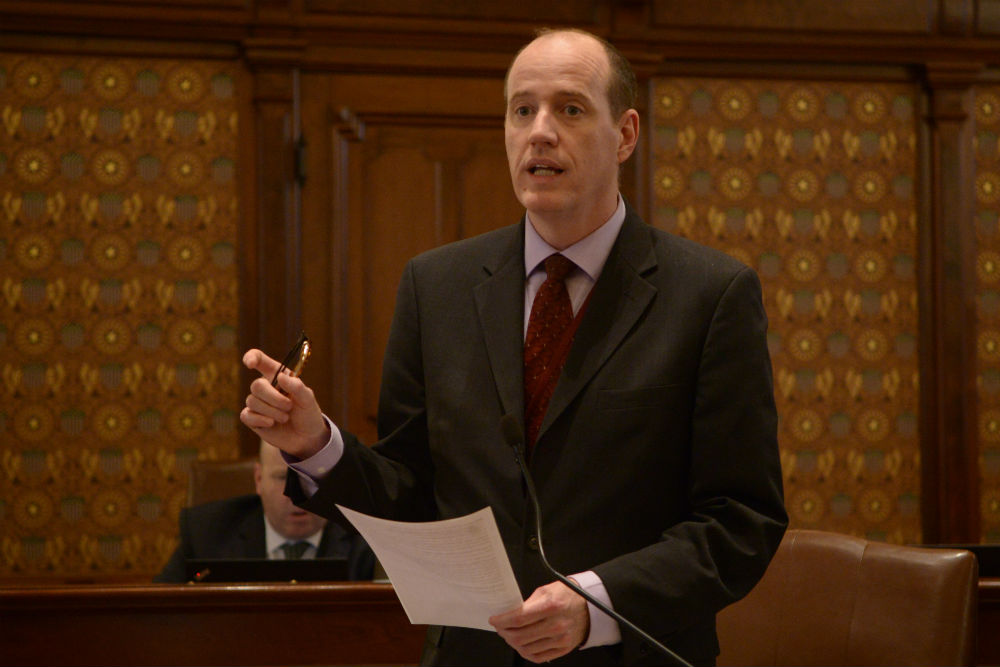 SPRINGFIELD – A requirement forcing Cook County seniors to reapply annually for a tax break will soon be eliminated under a measure co-sponsored by State Senator Bill Cunningham.
House Bill 961, passed by the Illinois Senate Wednesday, would eliminate the need for residents of Cook County residents aged 65 or older to reapply annually to receive the Senior Citizen Homestead Exemption, a property tax exemption designed to assist senior citizens financially.
Seniors would be required to reapply once more for the exemption in 2020, and would then be grandfathered into the program through 2024. Similar legislation, House Bill 833, was signed into law this summer, but required seniors to reapply in both 2020 and 2021.
“Seniors shouldn’t be forced reapply for the Homestead Exemption an extra time. It’s just common sense,” said Cunningham, a Democrat who represents portions of Chicago and the southwest suburbs. “You only turn 65 once, and there’s no reason to put seniors through a confusing reapplication process for this exemption when they’ve already proved that they qualify for it.”
Currently, every county in Illinois other than Cook may allow seniors to receive the exemption without reapplying.
The measure also requires Cook County agencies to record events that would end the exemption, such as property transfers, to ensure that ineligible property owners do not accidentally take advantage of the tax break.
House Bill 961 passed the Senate without opposition. It will now head to the governor’s desk.
- Details
- Category: Press Releases
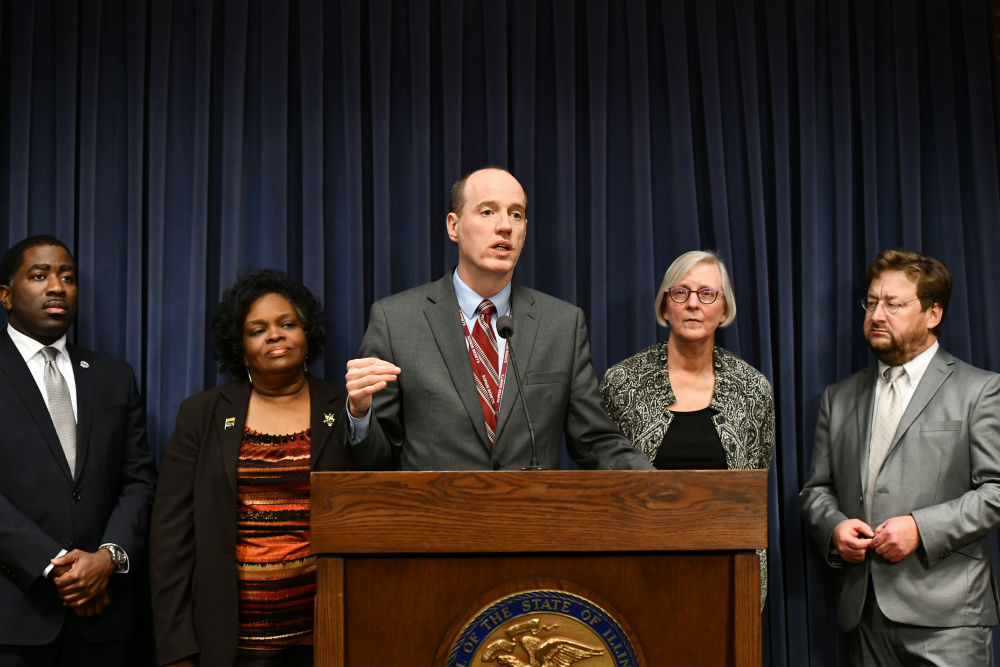 SPRINGFIELD – At a news conference Wednesday, State Senator Bill Cunningham announced the introduction of new legislation aimed at reducing costs and increasing access to public transportation for residents on Chicago’s south side and southwest suburbs.
“Residents on the south and southwest sides, as well as in the suburbs, are underserved when it comes to cheap, reliable methods of public transportation,” said Cunningham, a Democrat who represents portions of Chicago and the southwest suburbs. “We need to ensure everyone has affordable access to public transit and this legislation will provide another option to these communities.”
Senate Bill 2277 would require Metra, Pace, and the CTA to do the following:
- Reduce fares on the Metra Electric and Rock Island lines to CTA levels at in-city stations
- Decrease zone-based fares in the south suburbs on the Metra Electric and Rock Island lines
- Adopt the Ventra card to pay for fares on the Metra Electric and Rock Island lines
- Offer low-cost transfers between the Metra Electric, Rock Island, CTA, and Pace
Cunningham was joined at the news conference by transit equity advocates from the Coalition for a Modern Metra Electric and State Representative Marcus Evans Jr. (D-Chicago), who has introduced similar legislation, House Bill 3834, in the House.
A coalition of community-based organizations, religious groups, chambers of commerce and civic organizations have also signed on in support of the demonstration project.
“I welcome the bill being sponsored by Senator Cunningham. Residents of the south side of Chicago, and the south and southwest suburbs need faster, lower cost access to public transportation to get to work, to school, and to improve the quality of life for people who rely on public transportation,” said Linda Thisted, co-chair of the Coalition for a Modern Metra Electric. “This bill addresses long-standing transit inequities in our communities”
The measure will be considered by the Illinois Senate in the spring.
- Details
- Category: Press Releases
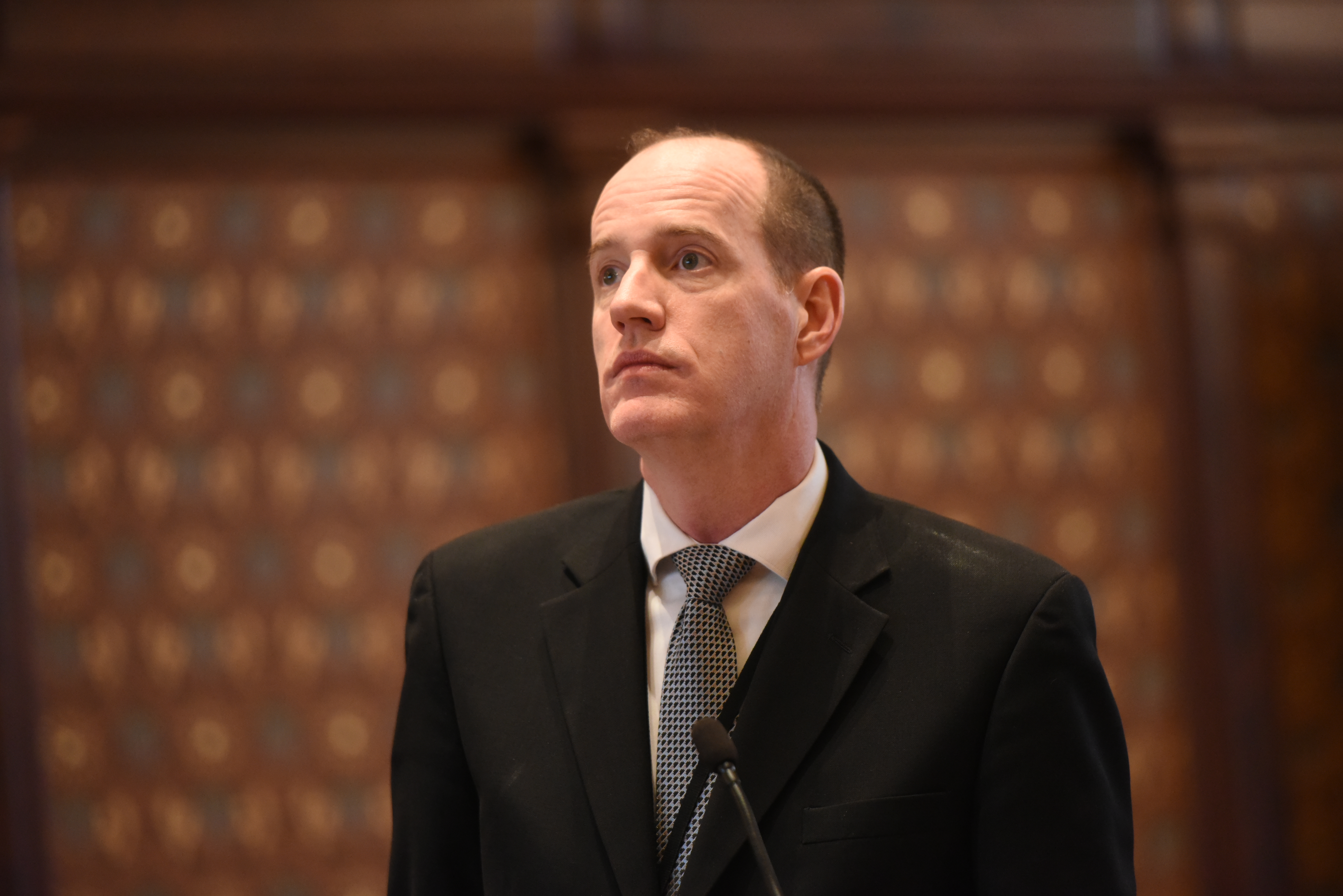 SPRINGFIELD – A bipartisan measure aimed at reducing skyrocketing prescription insulin costs passed the Illinois Senate Tuesday with support from State Senator Bill Cunningham.
“For years, the pharmaceutical industry was virtually unchecked in their efforts to increase profit margins on this drug, and, as a result, working families have struggled to pay for the supply they need,” said Cunningham, a Democrat who represents portions of Chicago and the southwest suburbs. “Legislators need to put people over the profit of corporations, and this legislation allows us to do just that.”
Senate Bill 667 would cap out of pocket insulin expenses at $100 for a 30-day supply and direct the Illinois attorney general to investigate reasons for the increasing costs associated with the medication.
According to the American Diabetes Association, there are more than 30 million Americans with diabetes, 7.4 million of which require prescription insulin every day to survive. However, the increasing costs associated with the medication have led many patients to ration their supply or seek care outside of the country.
“Drug companies are holding diabetics hostage by charging exorbitant rates for a medication they simply can’t live without,” Cunningham said. “No person should be forced to choose between purchasing the insulin they need, and buying groceries or paying their rent. By passing this legislation, we’re taking a step toward ensuring that they won’t have to make that choice in Illinois.”
The legislation would make Illinois just the second state in the nation to cap out of pocket insulin costs for diabetics. Colorado became the first earlier this year.
The measure passed the Senate 48-7. It will now move to the Illinois House of Representatives for further debate.
- Details
- Category: Press Releases
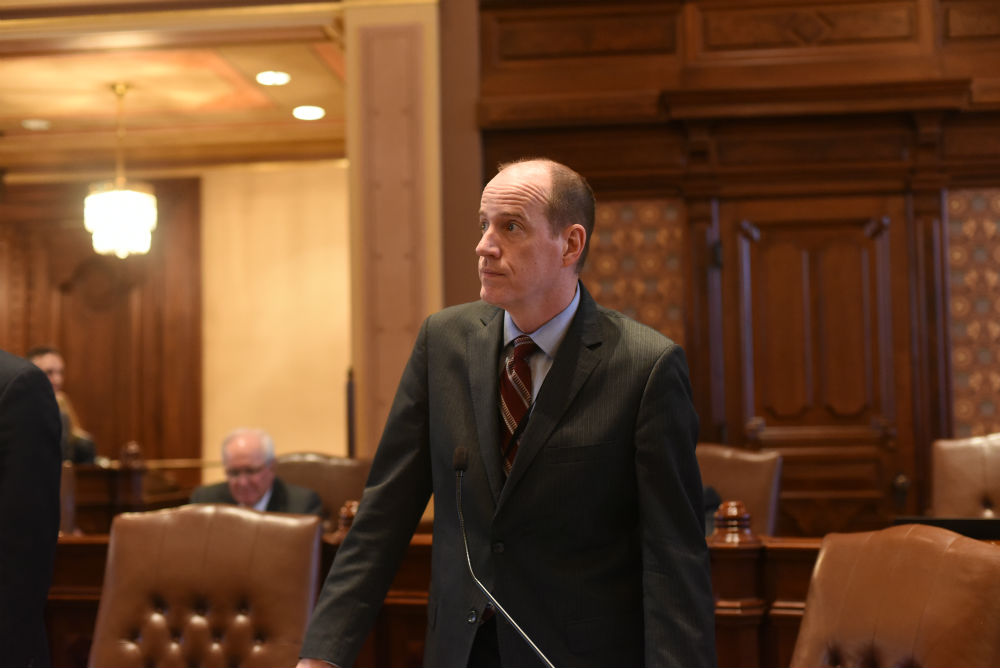 SPRINGFIELD – Chicago police officers would face fewer barriers to accessing certain benefits under legislation sponsored by State Senator Bill Cunningham that was signed into law by Gov. JB Pritzker today.
Under current law, the board of trustees for the PABF can issue a denial of the continuance of a duty or occupational disability benefit for a member. Members can appeal the denial, but the cost of litigating the appeal can be a heavy burden.
House Bill 2470 would require the Policeman’s Annuity Benefit Fund of Chicago (PABF) to pay court costs, litigation expenses and reasonable attorney fees for members who were unfairly denied duty or occupational disability benefits.
“Officers earn these benefits over the course of years of putting themselves in harm’s way to keep us safe,” said Cunningham, a Democrat who represents portions of Chicago and the southwest suburbs. “We need to ensure that they are properly rewarded for their service.”
The PABF may still strip an officer of benefits if an officer intentionally and unjustifiably delays proceedings and is ultimately convicted of a felony related to his or her service.
House Bill 2470 will go into effect January 1, 2020.
- Details
- Category: Press Releases
 ORLAND PARK – Area employers and staffing agencies will have the opportunity to connect with jobseekers during an Orland Park hiring event Thursday, September 26.
State Sen. Bill Cunningham and State Rep. Fran Hurley co-present the hiring fair, which will take place from 10 a.m. to 1 p.m. at the Orland Park Civic Center, 14750 S. Ravinia Ave.
“There’s a lot of economic opportunity in the southwest suburbs and plenty of qualified individuals ready to take advantage of it,” said Cunningham, a Democrat who represents portions of Chicago and the southwest suburbs.
Hiring preference will be given to veterans for the first half hour of the event.
In previous years, jobseekers had the chance to explore careers with companies in various sectors, including construction, hospitality, sales, retail, health care, state government, trucking and transportation, manufacturing, clerical, industrial and more.
“Our goal is link as many employers as possible with qualified candidates regardless of what sector they’re in,” Cunningham said. “This hiring event provides employers with a chance to interact with these individuals and make needed additions to their staffs.”
Jobseekers and employers are asked to register in advance at www.senatorbillcunningham.com. For more information, contact Cunningham’s district office at 773-445-8128.
- Details
- Category: Press Releases
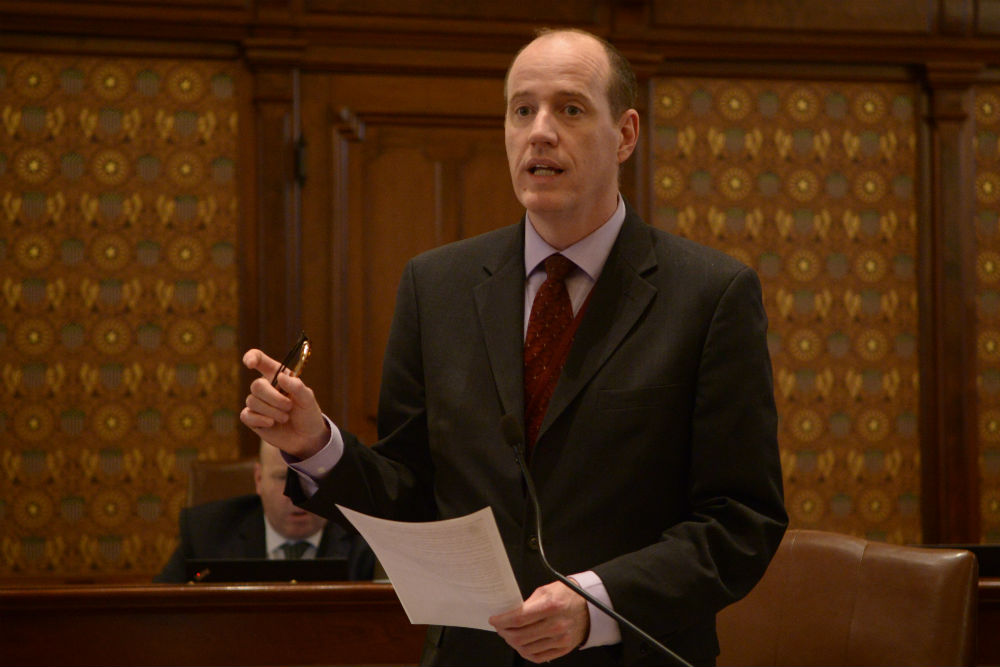 SPRINGFIELD – New legislation sponsored by State Senator Bill Cunningham and signed into law by Gov. JB Pritzker would crack down on public indecency and sexual misconduct in jails.
Under Senate Bill 416, if a defendant is found guilty of an administrative infraction related to public indecency or sexual misconduct while in jail it will be an aggravating factor in the defendant’s sentencing.
“There’s no excuse for this sort of behavior in jails and we need to start taking these offenses seriously and impose real consequences for them,” said Cunningham, a Democrat who represents portions of Chicago and the southwest suburbs. “This measure will provide a serious deterrent to prevent these infractions and make our jails safer both for inmates and jail personnel.”
The measure will go into effect January 1, 2020.
- Details
- Category: Press Releases
 SPRINGFIELD – First responders will be able to more effectively reach and treat overdose patients under new legislation sponsored by State Senator Bill Cunningham signed into law by the governor.
Senate Bill 1258 allows require emergency medical technicians in Chicago to report treatment of an individual experiencing a suspected or actual opioid overdose to the city for use in the Overdose Detection Mapping Application (ODMAP), developed by the Washington/Baltimore High Intensity Drug Trafficking Area (HIDTA).
“People are dying every day from overdoses and we need new tools to help combat this crisis,” said Cunningham, a Democrat who represents portions of Chicago and the southwest suburbs.
The ODMAP provides real-time overdose data throughout an area to mobilize an immediate response to an overdose spike. Each suspected overdose is plotted to a map that allows local officials to identify trends and develop strategies to more effectively respond to overdoses.
“This technology will be incredibly effective in improving overdose response time and fostering the development of new approaches that authorities use to fight the opioid crisis,” Cunningham said. “I feel confident that after we implement this program, we’ll see a lot more lives saved and a lot more people seeking help for their addiction.”
Senate Bill 1258 will take effect immediately.
More Articles …
Page 16 of 37

Follow Sen. Cunningham


eNewsletter Signup
Contact Info
Springfield Office:
Senator 18th District
325-G Capitol Building
Springfield, IL 62706
(217) 782-5145
(217) 782-2115 FAX
District Offices:
10400 S. Western Ave.
Chicago, IL 60643
(773) 445-8128
(773) 672-5143 FAX