Press Releases
- Details
- Category: Press Releases
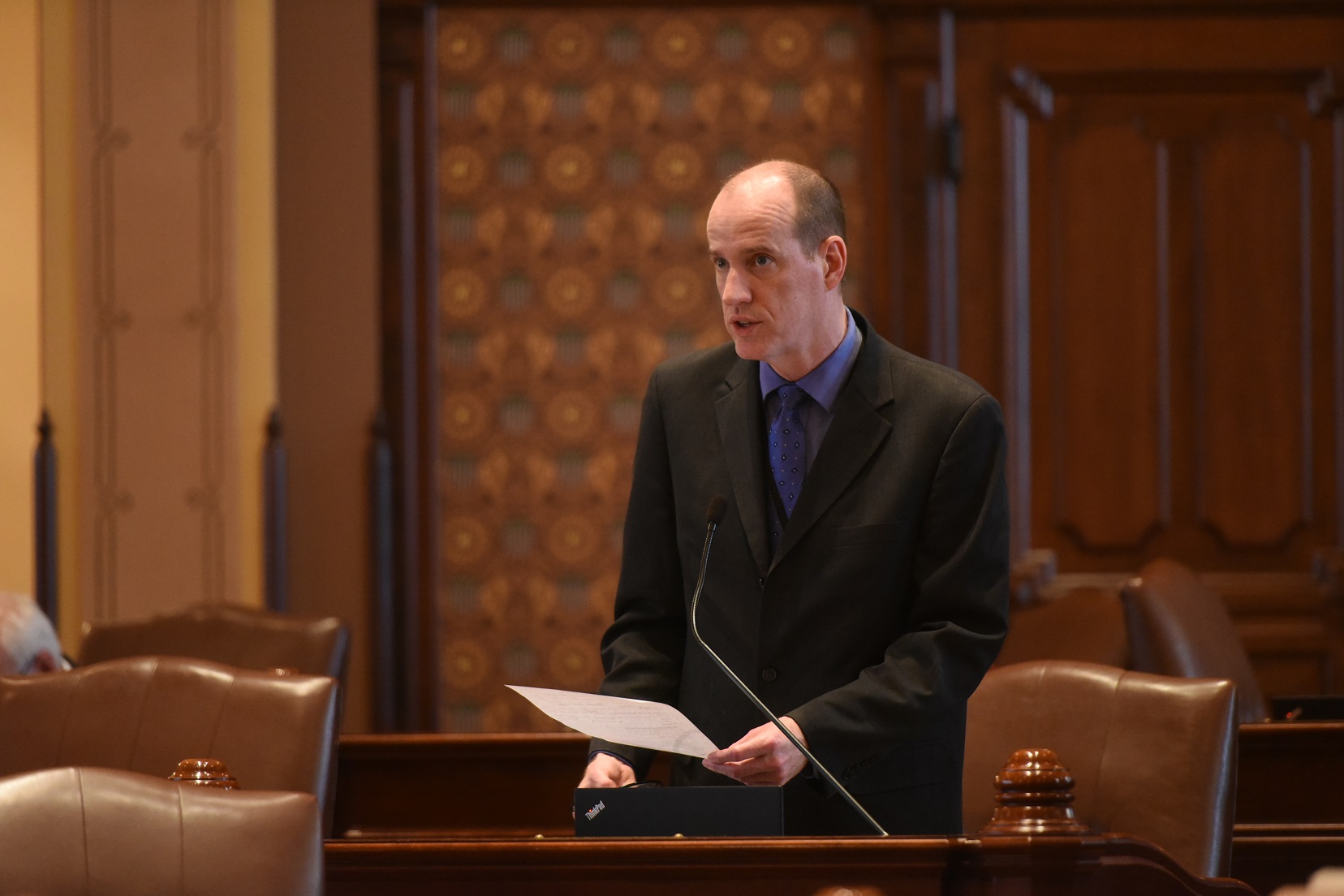 SPRINGFIELD – Local school boards would have the final authority to approve or decline new charter schools under legislation passed out of the Senate Executive Committee today by State Senator Bill Cunningham, a Democrat representing Chicago and parts of the Southwest Suburbs.
The legislation, House Bill 5175, eliminates charter schools’ ability to appeal a local school board’s decision to deny or not renew a charter school. Under current law, a charter school applicant may file an appeal with the State Charter School Commission, who can reverse the school board’s decision.
“Local school boards are deeply invested in the communities they serve and ultimately know what’s best for their schools,” Cunningham said. “The State Charter School Commission shouldn’t be able to reverse decisions by local leaders elected by voters in that community.”
The legislation leaves in place a provision allowing charters to be approved by referendum if at least 5 percent of the voters in a school district petition the school board.
HB 5175 now heads to the House for concurrence.
- Details
- Category: Press Releases
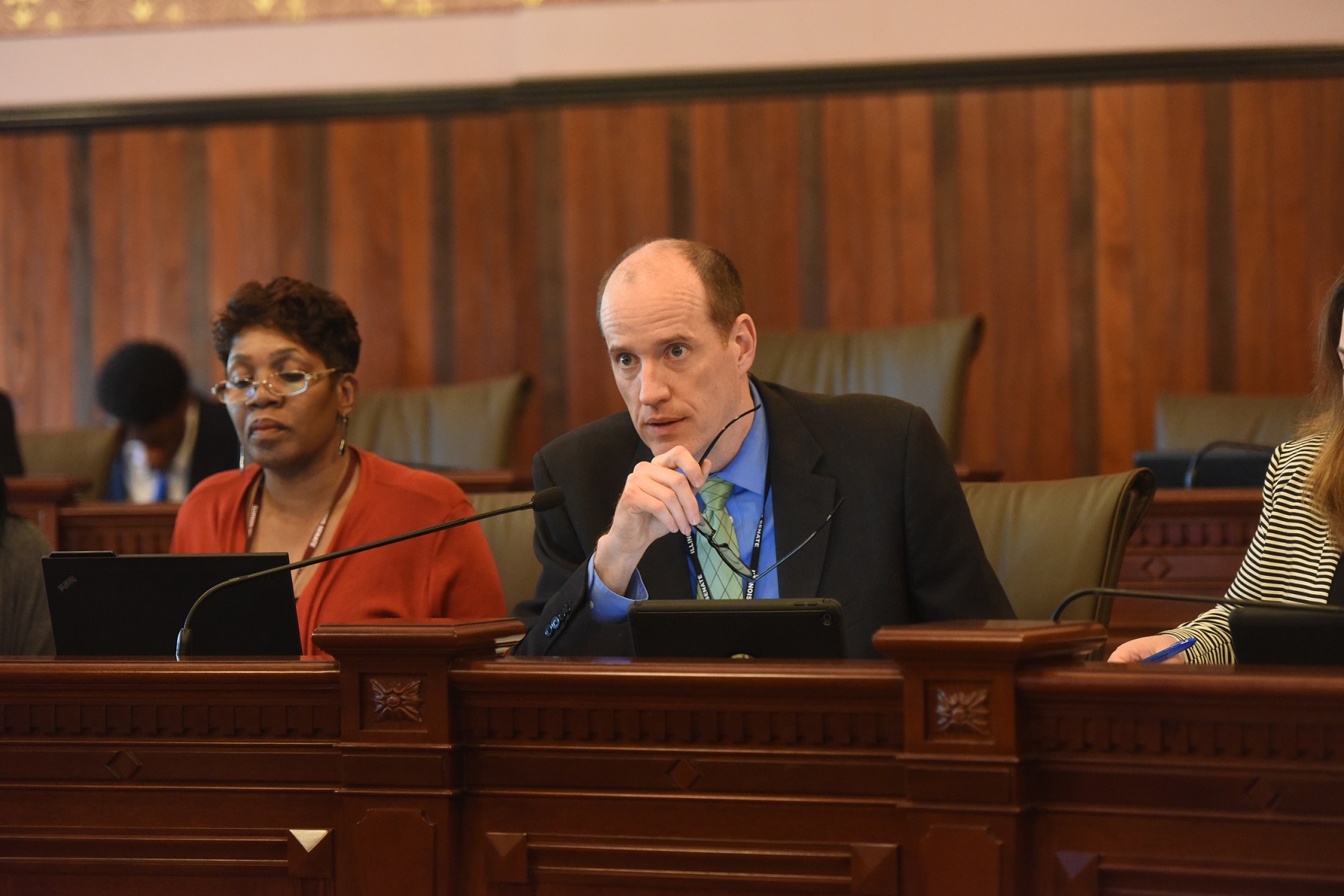
SPRINGFIELD - Illinoisan families using the Illinois Treasurer’s College Savings Pool would receive heightened safeguards on their investments and would be given the option to use the funds if unexpectedly faced with disability-related expenses under legislation passed out of the Illinois Senate today.
House Bill 4751, introduced by State Senator Bill Cunningham, would resolve discrepancies between federal requirements and the College Savings Pool administered by the Illinois State Treasurer’s Office. The state treasurer administers college savings programs like Bright Start and Bright Directions, which allow Illinois families to save while taking advantage of federal and state tax benefits, allowing contributions to grow on a tax-deferred basis.
HB 4751 minimizes the fees that the State Treasurer’s office may charge for the costs of managing the college savings accounts, by requiring that the Treasurer must keep the fees as low as possible and consistent with the associated costs. The measure also declares that contributions to the College Savings Pool are not state funds and cannot be commingled with state funds.
To help families faced with unexpected costs relating to disabilities, the measure would also allow account owners to roll over funds into an Illinois ABLE account with incurring taxes. Illinois ABLE is a tax-advantaged investment program that provides persons with blindness or disabilities the option to save for disability-related expenses without putting their federal means-tested benefits at risk.
“If circumstances change and college is no longer a goal, families dealing with the burden of disability expenses need to have the option to tap into their Bright Start or Bright Direction funds,” Cunningham said.
HB 4751 now moves to the House for concurrence. Cunningham represents parts of Chicago and the Southwest Suburbs.
- Details
- Category: Press Releases
SPRINGFIELD — State Senator Bill Cunningham was joined by students from Orland Park, Oak Lawn, Palos Heights, Palos Hills, and Palos Park for this year's Student Tech Showcase at the state Capitol.
Organized by Illinois Computing Educators, Tech Day aims to increase awareness of the critical role technology plays in the modern learning environment by offering student an opportunity to demonstrate their projects while highlighting the need for adequate funding for educational technology.
"In today's world, tech education is essential for setting our kids up for success," Cunningham said. "These projects demonstrate just how creative our kids are when given resources and tols to apply their ideas using technology."
The event featured students from High Point Elementary School and Liberty School in Orland Park; Oak Ridge Elementary School in Palos Hills; Palos East Elementary School in Palos Heights; Palos West Elementary School in Palos Park; Oak Lawn Community High School; and Conrady Junior High School in Hickory Hills.
- Details
- Category: Press Releases
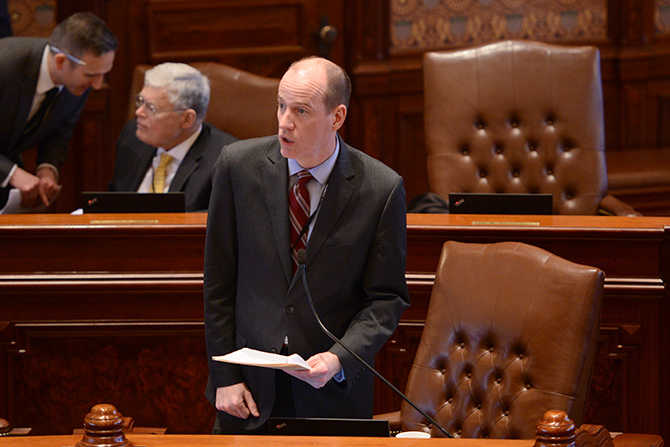
SPRINGFIELD – A legislative effort by State Senator Bill Cunningham to help stop the spread of influenza in hospitals and other health facilities passed the Illinois Senate today.
The measure, House Bill 2984, allows certified local health departments and any facility licensed by the Illinois Department of Public Health to implement more stringent flu vaccination policies aimed at protecting patients from exposure to the flu and improving vaccination rates.
“Given the concrete science behind the effectiveness of flu vaccines, we have a responsibility to protect patients from being exposed to the flu virus by the public employees charged with caring for them,” said Cunningham, a Democrat who represents Chicago and the Southwest Suburbs.
Under current law, employees of hospitals can refuse a flu vaccination for any reason as long as they declare a “philosophical objection.” Public health experts have testified that this loophole leaves patients vulnerable to the spread of influenza while they are hospitalized. If HB 2984 becomes law, only hospital employees with religious objections and certain medical conditions will be able to refuse the offer of a vaccination.
HB 2984 now moves to the Governor’s desk for his signature.
- Details
- Category: Press Releases

SPRINGFIELD — State Senator Bill Cunningham joined firefighters and their families from across the state today for the 25th annual Illinois Fallen Firefighter Memorial at the Capitol.
The Illinois Firefighter Memorial is dedicated to the firefighters of Illinois, who have given their lives in the line of duty and to those firefighters who heroically serve with courage, pride and honor. The Line of Duty Death Award is given to the family of a firefighter deceased in, or as a result of, the performance of their duty. In addition to firefighters and fire officials, the event features the Associated Fire Fighters of Illinois Honor Guard and Pipes & Drums.
This year, State Fire Marshall Matt Perez honored two firefighters: John “Mike” Cummins of the Homer Fire Protection District and Lawrence Matthews of the Dolton Fire Department.
- Details
- Category: Press Releases
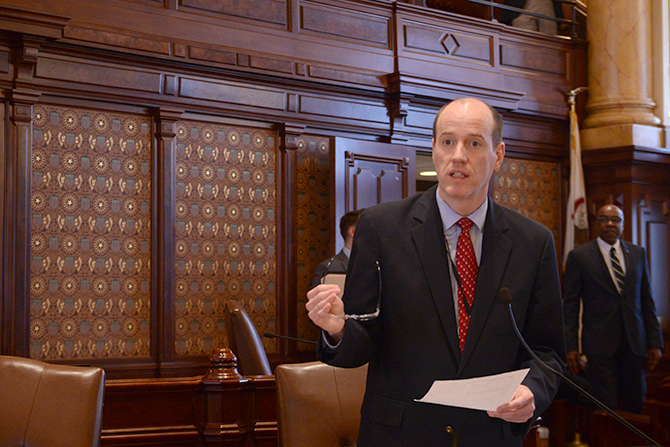
SPRINGFIELD — Secretary of State Jesse White has awarded more than $15 million in funding to libraries statewide through Illinois Public Library Per Capita grants to help with such expenses as materials, personnel, equipment, electronic access, telecommunications and technology.
“Since the time Abe Lincoln taught himself to be a lawyer, libraries have been a pillar of our community,” Cunningham said. “These grant will allow them to continue that important role.”
Libraries in Cunningham’s district will receive almost $275,000 in funding through the grants. The following Southwest Suburban libraries will receive funds:
| Library Name | City | Amount |
|---|---|---|
| Chicago Ridge Public Library | Chicago Ridge | $17,881.25 |
| Evergreen Park Library | Evergreen Park | $24,815.00 |
| Oak Lawn Public Library | Oak Lawn | $70,862.50 |
| Orland Park Public Library | Orland Park | $70,958.75 |
| Green Hills Public Library District | Palos Hills | $39,416.25 |
| Palos Park Public Library | Palos Park | $6,058.25 |
| Worth Public Library District | Worth | $13,486.25 |
| Alsip-Merrionette Park Public Library | Alsip | $27,850.00 |
- Details
- Category: Press Releases
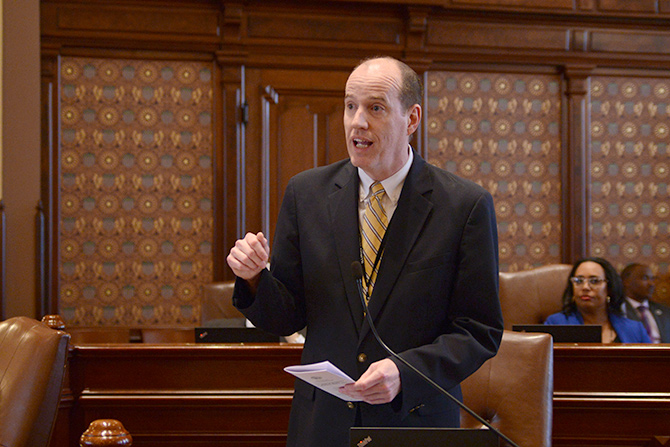
SPRINGFIELD - In the wake of a steep hike in the number of carjacking incidents in Chicago, the Illinois Senate took action this week to close a loophole carjackers have used to avoid prosecution and to ensure young offenders are sent to juvenile detention when arrested for carjacking incidents.
Under the current law, an officer may only pursue auto theft charges if the person driving the car has “knowledge that the vehicle is stolen.” As a result, car thieves routinely avoid accountability by denying that they have any knowledge that the vehicle is stolen.
State Senator Bill Cunningham, a Democrat representing Chicago and the Southwest Suburbs, is a chief co-sponsor of the legislation, Senate Bill 2339, which would allow police officers the ability infer based on surrounding facts and circumstances that an individual in possession of a stolen vehicle has knowledge that the vehicle is stolen.
The measure would also help ensure minors charged with carjacking are detained. A recent report in the Chicago Sun-Times showed that most juvenile carjacking suspects are released to their parents or on electronic monitoring within 24 hours of arrest. SB 2339 would curtail that practice.
“Violent offenders, regardless of their age, should not be able to escape accountability by lying to an officer about the source of their stolen vehicle,” Cunningham said. “Carjackers are aware that this outdated law allows a brazen lie to become a get out of jail free card. It’s time to put a stop to it.”
To discourage youth from starting on the path to carjacking, SB 2339 would require that minors charged with vehicular hijacking, aggravated vehicular hijacking, or possession of a stolen vehicle, to be held for a detention hearing within 40 hours of being detained. If the court finds probable cause that the minor committed the crime, the minor would be held for a court-ordered psychiatric evaluation, which would be used along with other factors to decide if the minor should be further detained, or receive counseling or other necessary services.
“Too often, minors who commit vehicular theft are arrested and released with no determination being made as to whether or not they are a danger to their community or their own well-being,” Cunningham said. “This bill will end that practice.”
SB 2339 passed the Senate and now heads to the House for consideration.
- Details
- Category: Press Releases
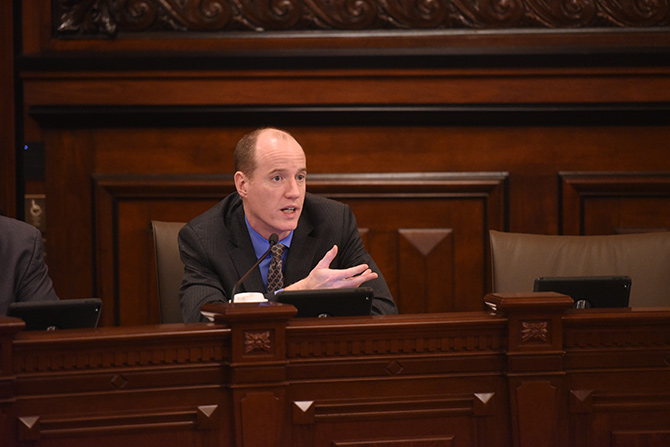
Springfield – The City of Chicago would be prohibited from requiring police officers to fulfill ticket quotas and assessing officers based on the number of tickets they issue under legislation passed out of the Illinois Senate today.
The legislation, Senate Bill 3509, is sponsored by State Senator Bill Cunningham, a Democrat representing Chicago and the Southwest Suburbs.
SB 3509 would rescind the City of Chicago’s exemption from a 2014 law banning counties and municipalities from assigning ticket quotas and using the number of tickets an officer issues as a performance evaluation. The law made exemptions for municipalities with their own independent inspectors general and law enforcement review authorities.
“Policing should not be used as a revenue enhancement strategy by municipalities,” Cunningham said. “This bill will ensure our officers are not distracted from their regular law enforcement duties in order to meet ticket quotas.”
Supporters of the legislation, such as the Fraternal Order of Police, argue that ticket quotas create unnecessary tension between law enforcement and the communities they serve by interfering with officers’ ability to exercise compassion in certain situations.
SB 3509 passed out of the Senate and now moves to the House for consideration.
More Articles …
- Cunningham moves to crack down on public indecency in Cook County Jail
- Cunningham measure cracks down on school violence threats on social media, expands mental health evaluations
- Cunningham's identity theft protection bill passes Senate
- Vaccine bill designed to fight the flu epidemic passes out of committee
Page 22 of 37

Follow Sen. Cunningham


eNewsletter Signup
Contact Info
Springfield Office:
Senator 18th District
325-G Capitol Building
Springfield, IL 62706
(217) 782-5145
(217) 782-2115 FAX
District Offices:
10400 S. Western Ave.
Chicago, IL 60643
(773) 445-8128
(773) 672-5143 FAX