Press Releases
- Details
- Category: Press Releases
Average family of four set to receive $600 in direct relief
SPRINGFIELD – The Illinois Senate approved a FY 23 budget and tax relief plan to offer $1.83 billion in relief to working families, and State Senator Bill Cunningham, a Democrat who represents portions of Chicago and the Southwest Suburbs, released the following statement in response:
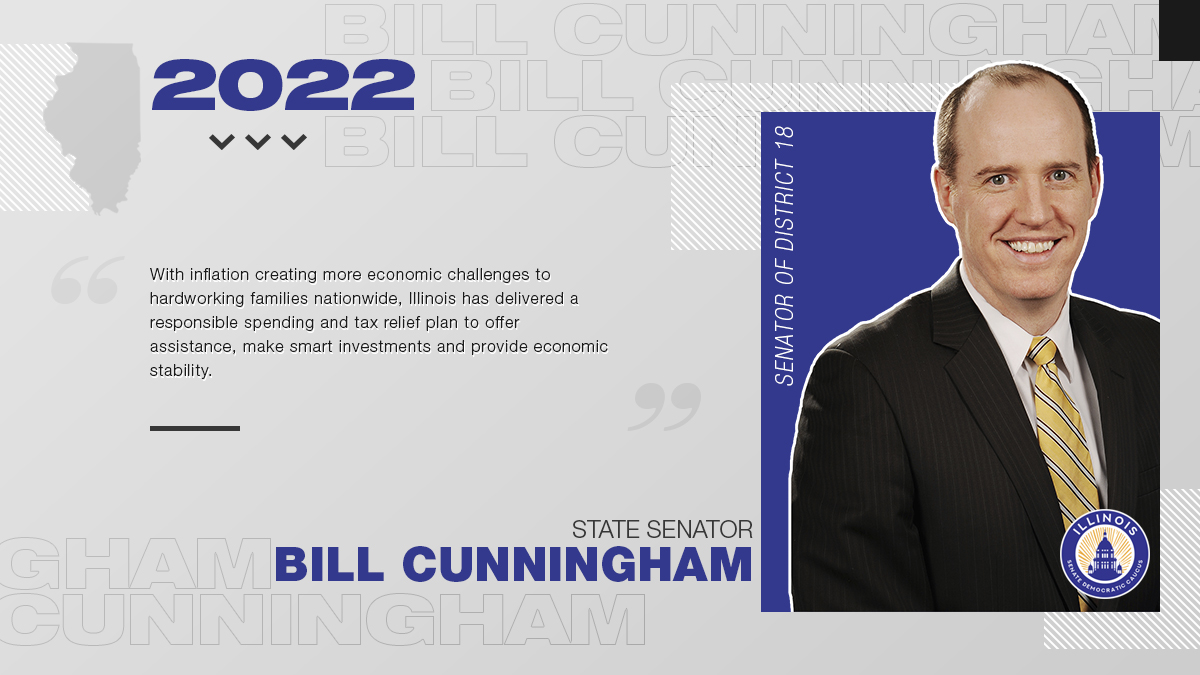
“With inflation creating more economic challenges to hardworking families nationwide, Illinois has delivered a responsible budget plan to offer relief, make smart investments and provide economic stability.
“By putting money back in residents’ pockets, our state is making an effort to support families with inflation-related burdens, create opportunity and set money aside for a rainy day.”
- Details
- Category: Press Releases
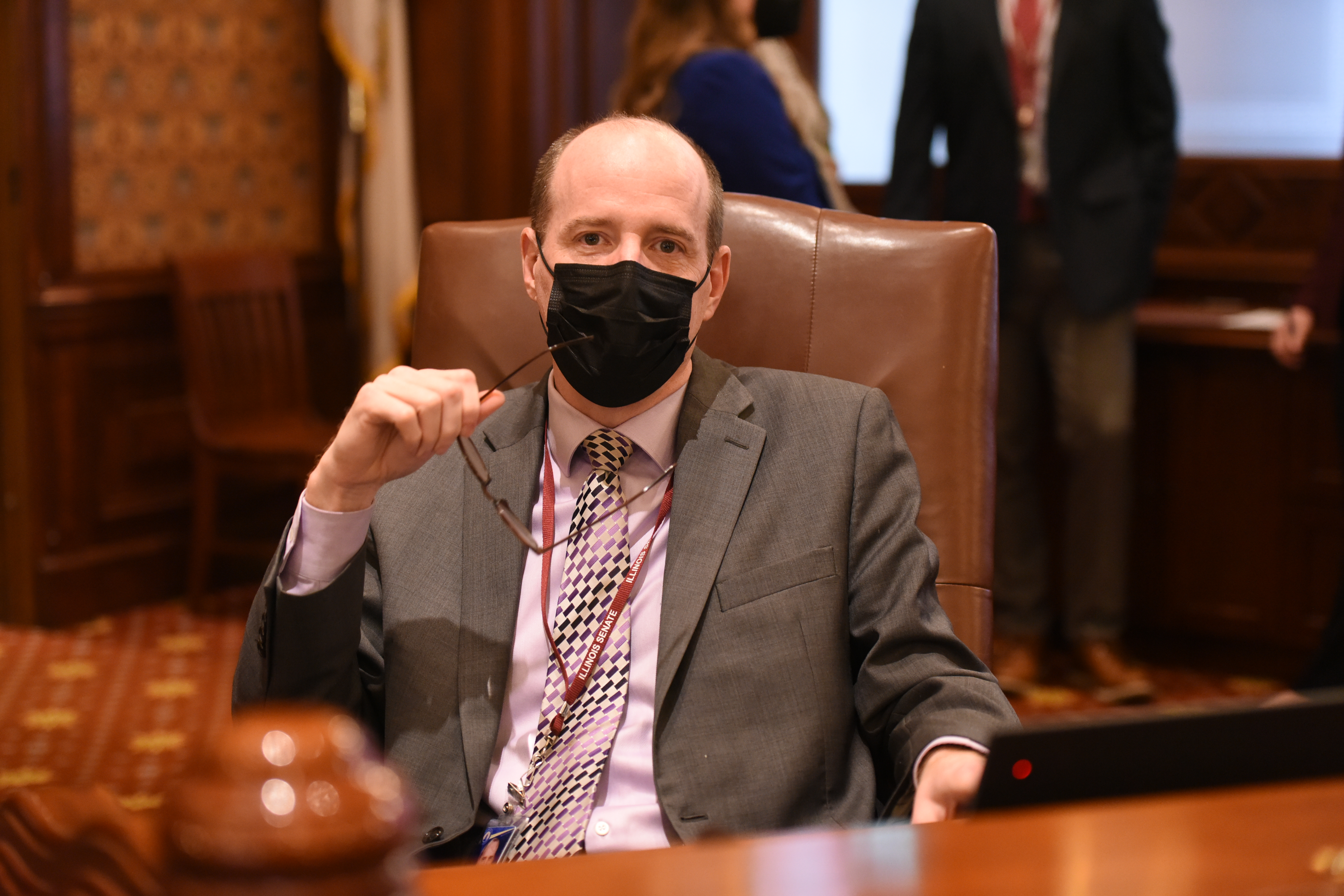 CHICAGO – State Senator Bill Cunningham announced more than $1.8 million awarded to local businesses from the Back to Business program.
“I am committed to helping our small businesses recover from COVID-19,” said Cunningham, a Democrat who represents portions of Chicago and the Southwest Suburbs. “This support for small business is good for our economy.”
The B2B grants are awarded by the Illinois Department of Commerce and Economic Opportunity using funds allocated to them by the American Rescue Plan through last year’s state budget.
So far – thanks to strong support from Senator Cunningham – DCEO has provided $200 million in B2B grants to small businesses throughout the state with an emphasis on disproportionately impacted areas. With nearly $50 million left to go, more businesses will have the opportunity to get a share of the relief funds.
“I am glad to see so many businesses on the southwest side and southwest suburbs take advantage of these grants,” Cunningham said. “We can all offer support by shopping locally whenever possible.”
Grants will continue to be awarded on a rolling basis. Visit the DCEO website for more information on the B2B program or check the status of an existing application by logging into the portal.
- Details
- Category: Press Releases
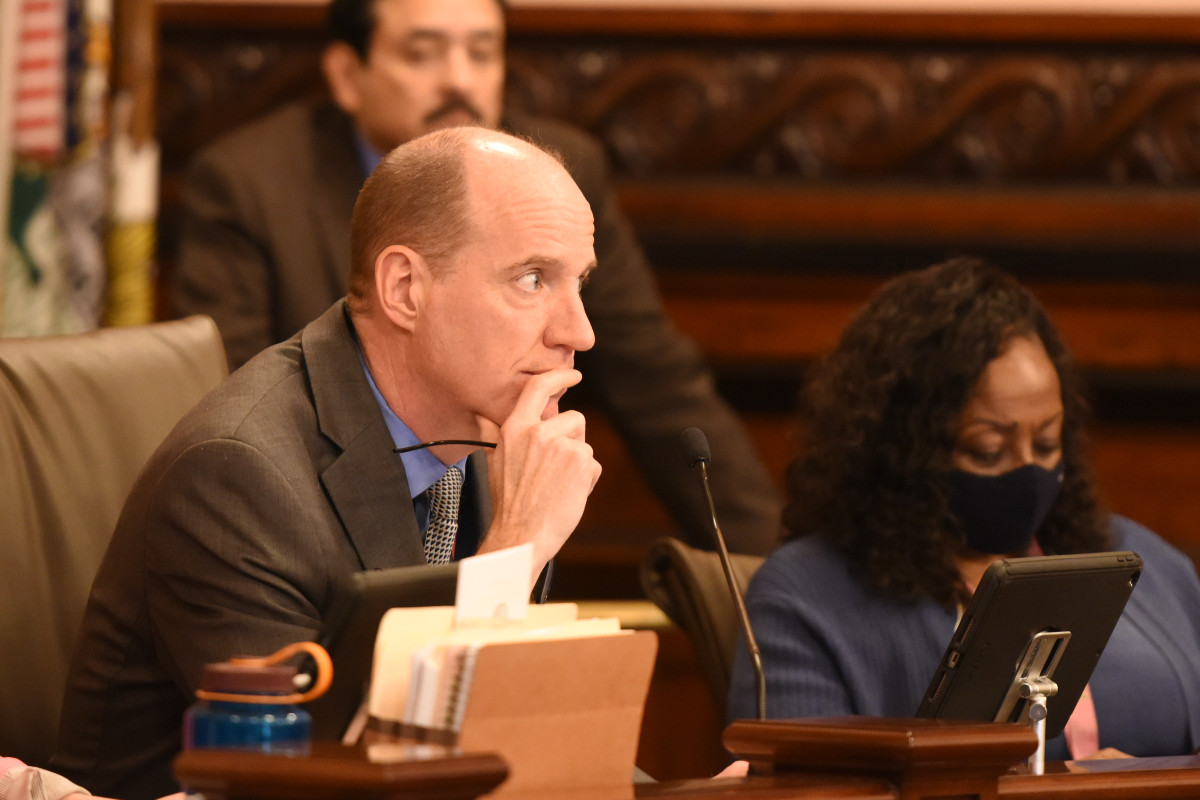 SPRINGFIELD – State Senator Bill Cunningham advanced a measure in the Illinois Senate that makes it easier for callers to reach 9-1-1 from hotels and businesses during an emergency on Thursday.
“This initiative will help ensure a quick response during times of an emergency,” said Cunningham, a Democrat who represents portions of Chicago and the Southwest Suburbs. “We are removing barriers that hinder people from calling 9-1-1 and making it easier for first responders to locate the caller.”
Under current law, multi-line telephone systems require dialing "9" or another number to reach an outside line. Places like businesses, hotels and government buildings use these systems to handle two or more calls coming in at the same time. Under the new law, MLTS vendors and manufacturers must configure new systems to support direct dialing 9-1-1.
The goal of this legislation is protect people and specifically children. In 2013, a women was killed in a hotel room by her estranged husband. Her daughter attempted to call 9-1-1 four times, but the calls never went through because the hotel’s multi-line telephone system required her to dial “9” before making an outbound call. Illinois will follow suit with other states who have already passed this legislation.
House Bill 5502 will also update regulation on multi-line systems to provide accurate information about the caller’s location within a building or complex. Far too often, large hotels or complexes use multi-line systems and it is difficult for emergency response to get an exact location on the caller. This ensures people who need help during an emergency are able to be located by first responders.
“This legislation will save lives and could save your child’s life,” Cunningham said. “I want to thank the Illinois State Police for bringing this issue to our attention.”
House Bill 5502 passed the Energy & Public Utility Committee on Thursday and awaits further consideration before the full Senate.
- Details
- Category: Press Releases
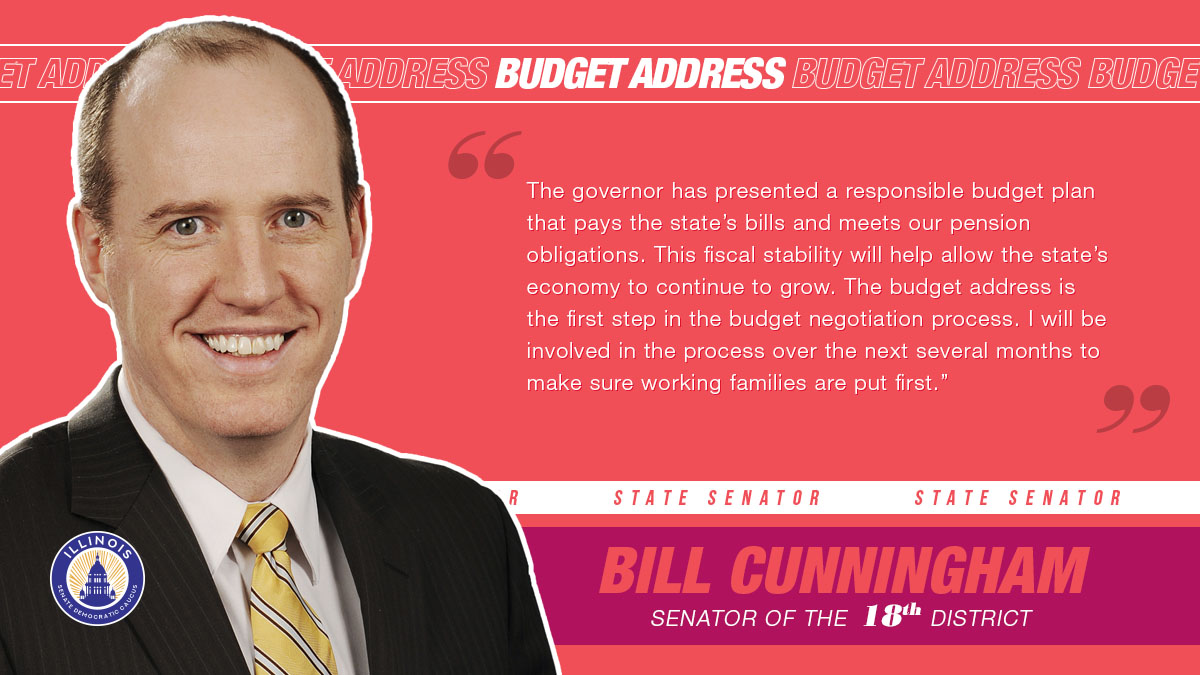
SPRINGFIELD – State Senator Bill Cunningham provided the following statement after hearing the governor’s budget address Wednesday:
“The governor has presented a responsible budget plan that pays the state’s bills and meets our pension obligations. This fiscal stability will help allow the state’s economy to continue to grow.”
“The budget address is the first step in the budget negotiation process. I will be involved in the process over the next several months to make sure working families are put first.”
- Details
- Category: Press Releases
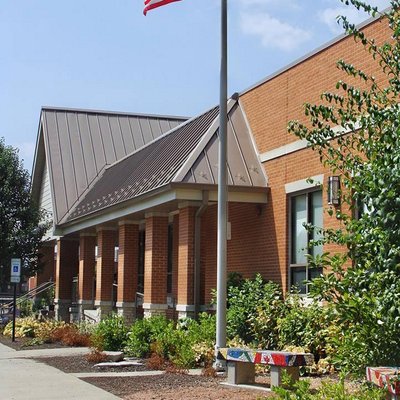 EVERGREEN PARK – The Evergreen Park Public Library will receive nearly $10,000 in grant money to provide the community with vital education resources thanks to support from State Senator Bill Cunningham.
“Libraries are necessary in giving access to knowledge,” said Cunningham, a Democrat who represents portions of Chicago and the southwest suburbs. “The funding granted to Evergreen Park Library will help it continue to provide a safe learning space for our community.”
The funding is allocated to libraries across the state to make upgrades, assist with the development of the local workforce and ensure the library stays open safely for families. The grant is comprised of both state and federal dollars.
“In a time with so many uncertainties, access to a library should remain a constant,” Cunningham opined. “I will never stop fighting for funding that benefits our children and working families.”
For a full list of libraries receiving a grant, click here.
- Details
- Category: Press Releases
 CHICAGO - State Senator Bill Cunningham congratulated seven businesses in the communities he represents that have already received more than $200,000 in Back to Business grants, and he encouraged more local entrepreneurs to apply.
“I talked to many small business owners who struggled – and in some cases are still struggling – during the ongoing pandemic,” said Cunningham, a Democrat who represents portions of Chicago and the southwest suburbs. “We created the Back to Business Program to help people like them keep their doors open and build back even stronger. It’s not too late to apply!”
The businesses in the 18th Legislative District that have successfully received grants illustrate the diversity of the area’s economy and how many different enterprises are eligible for the B2B program. They include restaurants, a salon, transportation companies, and an art business.
- Details
- Category: Press Releases
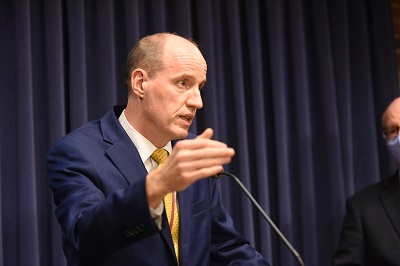 SPRINGFIELD – State Senator Bill Cunningham, who has been deeply involved in negotiations on a piece of legislation meant to spark Illinois’ renewable energy sector and preserve and create tens of thousands of jobs, celebrated the measure’s final passage through the General Assembly.
“This ambitious plan would make Illinois a national leader in fighting climate change and creating jobs in the clean energy economy,” said Cunningham, a Democrat who represents portions of Chicago and the southwest suburbs. “This legislation has been years in the making, and I want to thank both the labor and environmental communities for their passion and dedication in getting it across the finish line.”
The legislation, Senate Bill 2408, sets an ambitious goal of transitioning Illinois’ electric generation to 100% clean energy by 2050 and 50% renewable energy by 2040. It creates a firm schedule requiring coal, oil, and gas-based power plants to close or repurpose, addressing a major contributor to global warming. In order to reach these goals, it more than doubles the state’s budget for renewable energy, creates new workforce training programs, and allows for the construction of two renewable energy transmission lines.
- Details
- Category: Press Releases
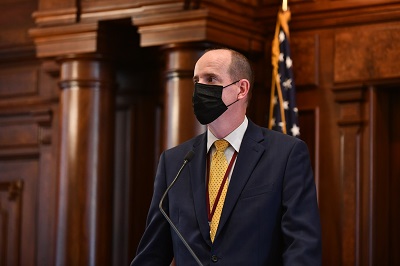 SPRINGFIELD – State Senator Bill Cunningham, who has been deeply involved in negotiations on a piece of legislation meant to spark Illinois’ renewable energy sector and preserve and create tens of thousands of jobs, praised the legislation’s Senate passage.
“This plan would make Illinois a national leader in fighting climate change,” said Cunningham, a Democrat who represents portions of Chicago and the southwest suburbs. “It also will help transition our energy workforce from fossil fuels to renewables earlier than any other state, giving those workers a distinct advantage in training and experience.”
The legislation, Senate Bill 18, sets an ambitious goal of transitioning Illinois’ electric generation to 100% renewable energy by 2050 and 50% renewable energy by 2040. It creates a firm schedule for closing coal, oil, and gas-based power plants, which are a major contributor to global warming. In order to reach these goals, it more than doubles the state’s budget for renewable energy, creates new workforce training programs, and allows for the construction of two renewable energy transmission lines.
More Articles …
Page 10 of 37

Follow Sen. Cunningham


eNewsletter Signup
Contact Info
Springfield Office:
Senator 18th District
325-G Capitol Building
Springfield, IL 62706
(217) 782-5145
(217) 782-2115 FAX
District Offices:
10400 S. Western Ave.
Chicago, IL 60643
(773) 445-8128
(773) 672-5143 FAX